Critical Thinking Skills for Kids
Encouraging critical thinking in children is more than just a learning goal—it's a foundation for future success. The Critical Thinking Skills for Kids bundle offers a vibrant, structured approach to nurturing this essential skill set in young learners aged 5–10. Designed with engaging visuals and interactive activities, it makes problem-solving, decision-making, and creative thinking an exciting journey rather than a chore.
What Is Critical Thinking Skills for Kids?
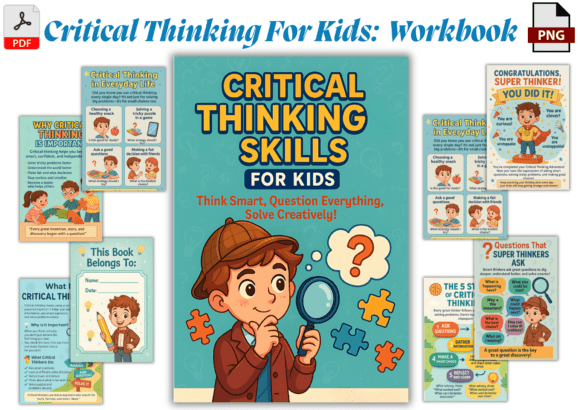
The Critical Thinking Skills for Kids educational pack is a ready-to-use resource that combines fun and learning. Each page features colorful illustrations, clear layouts, and motivational elements like certificates and challenges. It's formatted as PNG images or PDFs, making it easy to print or use digitally. With 14 pages of content, including over 15 unique lessons, it’s perfect for educators, parents, or anyone looking to support early cognitive development.
Why Different Audiences Care About Critical Thinking Skills for Kids
While the primary goal of the Critical Thinking Skills for Kids bundle is to help children develop essential skills, different adults may find value in it for various reasons. For example:
- Parents might use it at home to supplement their child’s education or provide enrichment during school breaks.
- Teachers can integrate the activities into classroom lessons, using them as part of weekly themes or group projects.
- Educators interested in homeschooling may appreciate the structured yet flexible format for creating personalized learning plans.
- Gift givers might choose this bundle as an educational gift that supports growth and curiosity in young minds.
- Entrepreneurs or small business owners could use it as a tool to offer workshops, summer camps, or online courses focused on early childhood development.
How Different Users Might Approach This Resource
The way people engage with the Critical Thinking Skills for Kids bundle often depends on their goals and experience levels. Here are some examples:
Beginners—such as new parents or teachers—may prioritize ease of use and clarity. They might look for resources that require minimal preparation and offer clear instructions for each activity. The structured lessons and ready-to-print format of this bundle make it ideal for those just starting out.
Experienced educators may focus on flexibility and adaptability. They might want to customize the content to fit specific curricula or learning objectives. The variety of activities and motivational elements in this bundle allows for creative integration into existing lesson plans.
Creators and bloggers might be drawn to the aesthetic appeal of the design and the potential for repurposing content. The eye-catching illustrations and clean layouts could inspire new content ideas or serve as templates for other educational materials.
Business owners interested in offering educational products or services may evaluate the bundle based on its commercial value. Its versatility for both digital and printed use makes it a strong candidate for resale or inclusion in educational packages.
Key Priorities When Evaluating Critical Thinking Skills for Kids
When considering whether the Critical Thinking Skills for Kids bundle fits their needs, users might weigh several factors:
- Learning Value: Does the content align with developmental milestones and educational standards? The bundle includes activities that promote exploration, curiosity, and confidence, which are key components of early learning.
- Quality and Presentation: Are the illustrations appealing and the layout easy to follow? The bright, kid-friendly design and clear educational structure ensure that even young learners can engage with the material effectively.
- Flexibility: Can the content be adapted for different learning environments or individual needs? The bundle's format allows for both classroom and home use, making it a versatile choice.
- Long-Term Usefulness: Will the resource remain relevant as the child grows? While designed for ages 5–10, the foundational skills taught here are transferable and can support continued learning in later years.
Practical Examples for Different Readers
A parent who wants to encourage independent thinking might use the Critical Thinking Skills for Kids bundle during family game nights, turning the activities into fun challenges that involve the whole family. A teacher might print the pages and use them as visual aids during group discussions about problem-solving strategies. An entrepreneur running a summer camp could incorporate these pages into their curriculum to teach kids how to think critically while having fun.
For those who prefer digital tools, the PDF format allows for easy sharing or display on classroom screens. The motivational messages and certificates included also add a sense of achievement, encouraging children to take pride in their progress.
Ultimately, the Critical Thinking Skills for Kids bundle is more than just a collection of worksheets—it’s a gateway to helping young learners build the skills they need to navigate the world with confidence and creativity. Whether used at home, in the classroom, or as part of a larger educational initiative, it offers a valuable and engaging way to nurture the next generation of thinkers.